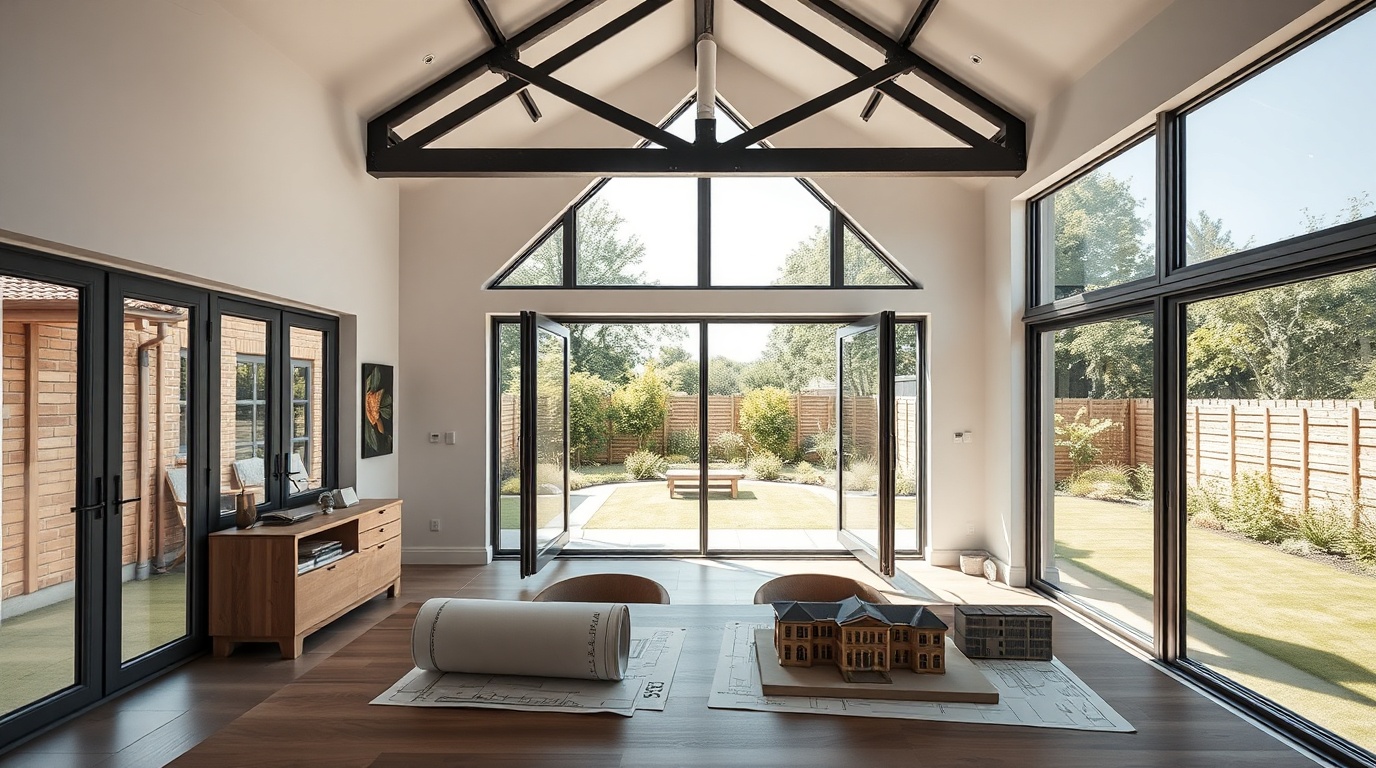
The short answer
A barn conversion is a complex, planning-sensitive project, so architect fees sit towards the higher end — most often a percentage of the construction cost for a full service. Converting an agricultural building into a home involves real challenges: the planning route (sometimes Class Q permitted development, sometimes full planning permission), the structural condition of an old building, insulation and damp in a structure never designed to be lived in, drainage in a rural setting, and often heritage or ecology considerations. The architect's fee is separate from the build cost, the structural engineer, the planning fee, Building Control and any specialist surveys. Because the planning and structural risks are significant, an experienced architect who knows rural conversions is usually worth the fee.
Barn conversions are one of the more specialised and planning-heavy projects, with rural and heritage factors that don't apply to ordinary extensions. Here's how the architect's fee works and where the complexity lies.
Architect cost — barn conversion
- Fee basisUsually % of build cost
- ComplexityHigh — planning & structure
- Planning routeClass Q or full permission
- Common factorsHeritage, ecology, drainage
- ExperienceRural-conversion know-how helps
Why barn conversions are complex
Turning an agricultural building into a home is unlike a standard extension, and several factors push up both the difficulty and the architect's role:
- Planning: some barn conversions use Class Q permitted development rights (which allow certain agricultural buildings to become homes within limits and conditions), while others need full planning permission. Establishing the right route, and what it allows, is a specialist exercise.
- Structure: old barns may have walls, frames or foundations not built for residential loads, so a structural survey and engineer's input are usually essential.
- Insulation and damp: a building never designed to be lived in has to be made warm, dry and energy-efficient without destroying its character.
- Heritage and character: many barns are in conservation areas, are listed, or have features planners want retained, which shapes the design.
- Rural services: drainage (often off-mains), access and ecology (bats and nesting birds are common in old barns) all add steps.
Each of these needs careful design and coordination, which is why barn conversions sit at the fuller, higher-fee end of architect involvement.
Fees and the costs around them
The architect's fee is a percentage of a substantial build cost, with several specialists alongside. On a rural conversion, surveys and reports are more likely to be needed than on an ordinary extension.
| Item | Indicative basis | Notes |
|---|---|---|
| Architect — full service | % of build cost | higher end; coordination-heavy |
| Structural engineer | Separate fee | old structure, loads |
| Ecology / bat survey | Separate, often needed | common in old barns |
| Planning fee | Paid to council | Class Q or full permission |
| Building Control + drainage | Separate | build checks, off-mains drainage |
Indicative UK basis for guidance only. Excludes the build cost and VAT. Source: RIBA fee guidance and HomeOwners Alliance cost guides.
Why experience matters on a barn
Barn conversions reward an architect who has done them before. The planning side alone can be decisive: understanding whether your barn qualifies for Class Q or needs full permission, what each route permits, and how to design a scheme planners will accept, can make the difference between a viable project and a dead end. An architect familiar with rural and heritage planning will shape a proposal that respects the building's character — often a planning requirement — while still delivering a comfortable, modern home.
The structural and building-physics challenges are equally specialist. Old barns weren't built to residential standards, so making one warm, dry and structurally sound without erasing the character that made it worth converting is a genuine design problem. Coordinating the structural engineer, the ecologist, the drainage and the heritage constraints into one coherent scheme is exactly where an experienced architect earns the fee. Budget the whole project realistically — the build cost is high, and the architect, engineer, surveys and statutory fees all sit on top — and choose an architect who can show relevant rural-conversion experience. On a project this specialised, that track record is worth as much as the fee itself, because the main risks (planning refusal, structural surprises, ecology delays) are precisely the ones an experienced hand knows how to manage.
The factors that decide whether a barn conversion is viable
Before the design even begins, a barn conversion's viability rests on a set of factors an experienced architect will assess early — because the time to discover a project is unworkable is at the start, not after fees have been spent:
- Planning route and eligibility: establishing whether the barn qualifies for Class Q permitted development or needs full planning permission is the first gate. Class Q has detailed conditions about the building's prior agricultural use, its structural soundness and the extent of works allowed, and not every barn passes them.
- Structural condition: an old barn's walls, frame and foundations may or may not be capable of carrying residential loads and a new roof. A structural survey early on tells you whether you're converting a sound structure or effectively rebuilding, which transforms the cost.
- Ecology and protected species: bats and nesting birds are common in old rural buildings and are legally protected. An ecology survey is frequently required before planning, and because some surveys can only be done in certain seasons, this can set the earliest start date for the whole project.
- Access, services and drainage: rural sites often lack mains drainage, so a septic tank or treatment plant may be needed, and access, water and power connections can all add cost that an urban project wouldn't face.
- Heritage and character constraints: listing or conservation-area status, or planning conditions to retain the barn's character, shape what's possible and rule some changes out.
An architect who has done rural conversions assesses these together at the outset and gives you a realistic read on whether the project stacks up before you commit to a full fee. That early judgement is one of the most valuable things they bring, because a barn conversion that runs into an insurmountable planning or structural problem halfway through is an expensive way to learn the project was never viable. Budget for the early surveys and the architect's feasibility work as money that protects the much larger sums to follow, and weigh the finished home's value against the full cost — build, design, engineer, surveys and statutory fees combined — before deciding to proceed.
Frequently asked questions
Why are architect fees higher for a barn conversion?
Because barn conversions are complex and planning-sensitive. They involve establishing the planning route (Class Q or full permission), assessing an old structure, insulating a building never meant to be lived in, and dealing with heritage, ecology and rural drainage. All of that needs experienced design and coordination.
What is Class Q for barn conversions?
Class Q is a permitted development right that allows certain agricultural buildings to be converted to homes within limits and conditions, without full planning permission. Not every barn qualifies, and the rules are detailed, so establishing whether it applies to your barn is a specialist part of the project.
Do I need an ecology survey for a barn conversion?
Often, yes. Old barns commonly host bats or nesting birds, which are legally protected, so an ecology survey is frequently required before planning. Some surveys are seasonal, which can affect your timetable, so it's worth identifying this need early in the project.
Sources & further reading
- Planning Portal — change of use and permitted development
- RIBA — how much does an architect cost
- HomeOwners Alliance — barn conversions
Figures on this page are typical UK ranges drawn from published sources and depend on your specific project. They are guidance, not a quotation.