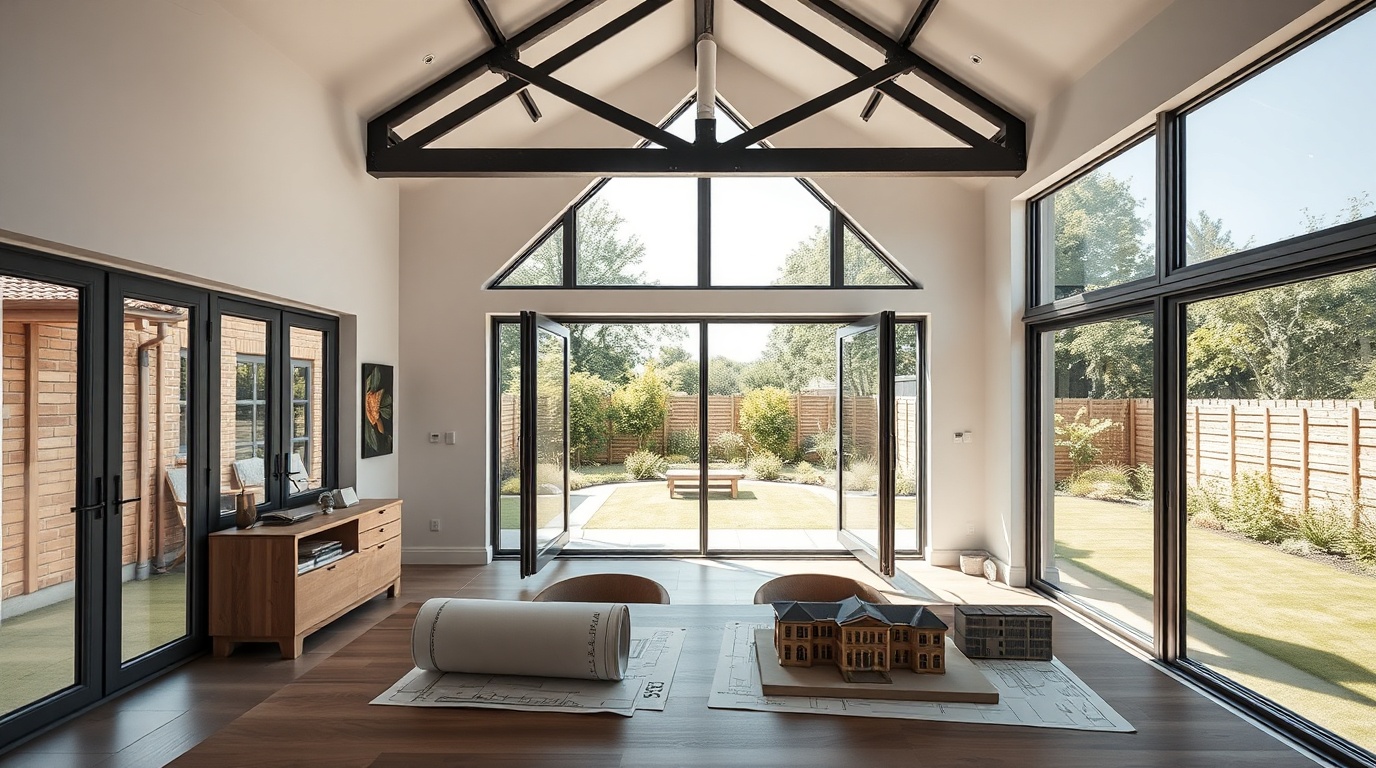
The short answer
They're two different procurement routes, each with honest trade-offs. With an architect (traditional route), you appoint the designer separately from the builder: you get independent design, a neutral tender set so builders quote like-for-like, and an architect overseeing the work on your behalf. With a design-and-build contractor, one firm handles both design and construction under a single contract — more convenient, one point of responsibility, and often a clearer fixed price, but the design is shaped by the builder and you lose the independent check. Neither is universally "better": an architect-led route tends to suit design-led or complex projects where independence matters; design-and-build can suit simpler projects where convenience and cost certainty matter more.
This is one of the biggest decisions in how you run a project, and it's less about quality than about who controls the design and who you answer to. Here's an honest comparison of the two routes.
Two procurement routes
- Architect routeIndependent design + oversight
- Design & buildOne firm, one contract
- Design controlYou (via architect)
- ConvenienceDesign & build
- Independent checkArchitect
The architect-led (traditional) route
In the traditional route, the designer and the builder are separate. You appoint an architect to design the project, then a builder to construct it — and the architect typically stays involved on your side. The strengths:
- Independent design. The architect designs around your brief, not around how a particular builder prefers to work.
- Like-for-like tendering. A neutral set of tender drawings lets several builders quote the same scheme, so you can compare prices fairly.
- Oversight on your behalf. As contract administrator, the architect inspects the work against the drawings, issues instructions, and certifies payments — an independent check that the work is right before you pay for it.
The trade-offs are that it's two appointments to manage, the design and build are sequential (which can take longer), and the cost is the architect's fee plus the build, rather than one bundled figure.
The design-and-build route
With design-and-build, a single contractor takes responsibility for both the design and the construction under one contract. This is common with specialist firms (loft and extension companies often work this way). The strengths:
- Convenience. One firm, one contract, one point of contact for both design and build.
- Single responsibility. If something goes wrong, there's no gap between "designer's fault" and "builder's fault" — it's all the same firm.
- Cost certainty. You often get a clearer fixed price for the whole package up front.
The trade-offs: the design is led by the builder, which can favour what's efficient for them over what suits you; you lose the independent check, because the firm assessing the work is the firm doing it; and it can be harder to compare quotes, since each design-and-build offer is a different package rather than the same scheme priced by several builders.
| Factor | Architect-led | Design & build |
|---|---|---|
| Design independence | High | Lower (builder-led) |
| Single point of responsibility | No | Yes |
| Independent oversight | Yes | No |
| Compare quotes fairly | Easier | Harder |
| Convenience / speed | More to manage | Streamlined |
Indicative comparison for guidance only. Sources: RIBA and HomeOwners Alliance guidance.
Which route suits your project?
The right choice depends on what you value most: design control and independence, or convenience and cost certainty.
- Lean architect-led when the project is design-led, complex, on a sensitive site, or where you want an independent professional checking the work before you pay — a bespoke extension, a major remodel, or a one-off new build.
- Lean design-and-build when the project is fairly standard, you've found a reputable firm with strong references and examples, and convenience, a single contract and a clear fixed price matter more than bespoke design.
A middle path some people take is to use an architect for the design and planning, then hand a well-detailed scheme to a builder for construction — keeping design independence while simplifying the build. The honest bottom line: neither route is better in the abstract. It's a trade-off between independent design and oversight on one side, and convenience and single-point responsibility on the other. Whichever you choose, check references and examples carefully, and make sure structural calculations and a Building Control completion certificate are covered.
Frequently asked questions
Is design and build cheaper than using an architect?
Sometimes the bundled price looks lower, but it's not always comparable — you're buying a package rather than a like-for-like scheme priced by several builders. Design-and-build can offer cost certainty, while an architect-led route makes it easier to compare quotes and check value independently.
Do I lose design quality with design and build?
Not necessarily, but the design is led by the contractor and shaped partly around how they prefer to build, so it may be more functional than bespoke. For a design-led result on a complex or sensitive project, an independent architect typically gives more design control.
Can I use an architect for design and a separate builder?
Yes — that's the traditional route. The architect designs the project and prepares tender drawings, and you appoint a builder to construct it, often with the architect overseeing the work. It keeps design independence and lets several builders quote the same scheme.
Sources & further reading
- RIBA — working with an architect
- HomeOwners Alliance — do I need an architect?
- RIBA — the RIBA Plan of Work
Figures on this page are typical UK ranges drawn from published sources and depend on your specific project. They are guidance, not a quotation.